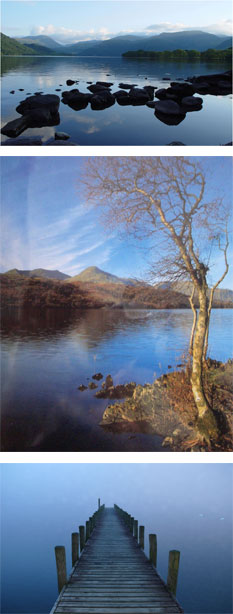
Coniston
Although Coniston derives its name from the Anglo Saxon "king's village", the area first played host to prehistoric settlers on nearby Banishead Moor-with its remains of a stone circle-above the village. Vikings (Coniston Water's name was originally Thorstanes Watter, named after a Viking settler) and Norsemen farmed the surrounding land. But the village of Coniston, on the edge of Coniston Water, came into its own as a result of the mining industry, and the village still retains this heritage.
 Bronze Age man first took advantage of the copper ore on the hillsides. The Romans worked with pig iron in the area. Coniston Copermines and Swirl How By George TodMining continued during the Elizabethan Age, and the monks of Furness Abbey took advantage of the ore and timber rich hills. Local grey slate was quarried for use in roofing. During the 18th and 19th centuries, the mining industry underwent major development. The hillsides show evidence of this activity, especially in the Coppermine Valley, where spoil heaps and old buildings still stand above the village. Railroads were first established in the area to carry the mining materials to market, then served as passenger lines. Until 1958 a scenic rail journey linked Coniston to the main coastal line
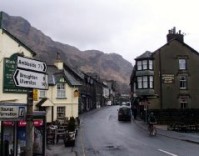
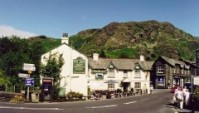
Today whitewashed and grey, slate-roofed buildings make up the village. The microbrewery of the 400-year-old coaching inn, the Black Bull, produced an award winning beer. The oldest building is Coniston Hall, its rebuilding dating from the 16th century. Once home to the largest landholders in the area, it is particularly notable for its huge chimneys done in the typical round Lakeland style. The medieval great hall was 50 feet long. A courtroom wing was 60 feet long.
 A local museum, the Ruskin Museum, pays tribute to Coniston's most famous resident, John Ruskin, who lived at 'Brantwood' on the shores of Coniston Water from 1872 to1900. The poet/artist/writer/social reformer is buried in St Andrew's churchyard-a green slate carved cross marks his grave. The original church, built in 1586, was demolished in 1819 to build the present St Andrew's Church. Stained glass and other features give evidence of the wealthy patrons of the area. The museum also contains information on the history of Coniston and the Ruskin collection of minerals.
Mountains slope down to the shore on the western side of Coniston Water, which is in care of the National Trust and Lake District National Park. The Victorian steam yacht Gondola, in service between 1859 and 1940, was restored by the National Trust in 1977 and plies the waters of Coniston lake-five miles long and 180 feet deep-from its pier. The boat was originally commissioned by wealthy men connected with the Furness Railway to conduct tourists on a tour of the lake and includes a luxurious red Gondola Engine Courtesy of Barbara Ballardplush saloon, a quilted ceiling, and mahogany trim.
Famous people who visited the area included the poet Tennyson, who spent his honeymoon here in 1848, and the painter Turner. The famous children's story, The Swallows and the Amazons, is set around Coniston Water (the film was made at Bankground), and was written by a local, Arthur Ransome.